

15:00 开始 · 网络空间安全学院 305 报告厅
LECTURE 01
Simpler symmetric cryptography

Prof. Joan Daemen
Full professor symmetric cryptography, Radboud University of Nijmegen, The Netherlands
Abstract报告摘要
I started doing research in symmetric cryptography in 1988 and soon the main underlying theme of my work (alone, with Vincent Rijmen, in the Keccak team and ad-hoc collaborations) became the design of simple cryptographic schemes. This has lead to a vision on how symmetric cryptography should be built and in this talk I will share this with you.
In short:
- In keyed cryptography, we replace the block cipher as central primitive by the deck cipher, a hybrid between a MAC function and a stream cipher that emulates a stateful random oracle. On top of the deck cipher we build simple modes for different flavors of (authenticated) encryption that have almost trivial security proofs. We build deck cipher with simple constructions such as keyed duplex and farfalle.
- In unkeyed cryptography, we replace the hash function as central primitive by the extendable output function (XOF), obviating the need for domain extenders such as MGF. On top of XOFs we build simple modes for key derivation and pseudorandom generation. We build XOFs with simple constructions such as sponge and duplex that are indifferentiable from a random oracle, obviating the need for things like HMAC.
- In both cases we build our primitives from iterated permutations with round functions designed according to the wide-trail strategy. They have a non-linear layer based on chi, a linear mixing layer and one or more bit shuffles and can be implemented efficiently in dedicated hardware and software.
Biography报告人简介
Joan Daemen is full professor symmetric cryptography at the Radboud University of Nijmegen, the Netherlands. He is co-designer of the influential Rijndael block cipher, that was selected by NIST as the Advanced Encryption Standard in 2000 and co-designer of the Keccak cryptographic hash function thate was selected as the SHA-3 hash standard by NIST in 2012 and is a founder of permutation-based cryptography.
He has over 20 years of security industry experience, including work as a security architect and cryptographer for STMicroelectronics.
In 2017 he won the Levchin Prize for Real World Cryptography “for the development of AES and SHA3”, he became an IACR fellow in 2025, served as Eurocrypt program co-chair in 2026 and won the Frontiers award together with Vincent Rijmen also in 2026. In 2018 he was awarded an ERC advanced grant for research on the foundations of security in symmetric cryptography called ESCADA.
LECTURE 02
The AI-Powered Leak: Side-Channel Security for Crypto and Neural Networks
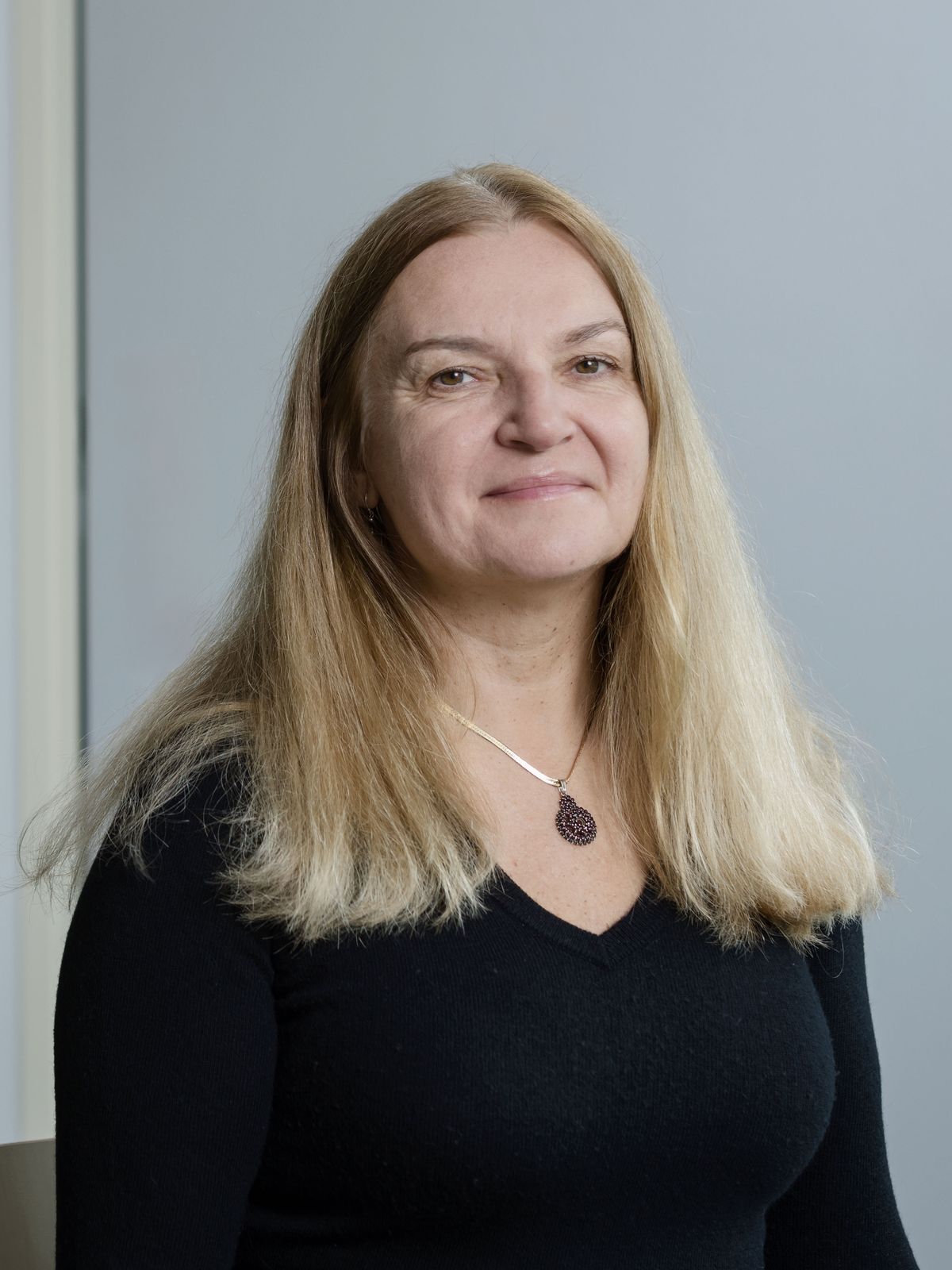
Prof. Lejla Batina
Professor of Embedded Systems Security, Radboud University in Nijmegen · Adjunct Professor, University of Bergen, Norway
Abstract报告摘要
Cryptography is the cornerstone of secure systems, yet its implementations often remain vulnerable to physical attacks such as side-channel analysis (SCA) and fault injection. These so-called implementation attacks represent the most effective attack vector against embedded cryptographic systems today.
In this talk, I will first explore various aspects of side-channel analysis on cryptographic implementations and its growing interplay with AI — an interaction that is becoming increasingly important for the security of post-quantum cryptography in future systems. Second, I will show how this leak goes both ways: side-channel analysis also threatens the confidentiality of commercial neural networks, turning AI itself into the target. Finally, I will highlight promising avenues for future research.
Biography报告人简介
Lejla Batina is a Professor of Embedded Systems Security at Radboud University in Nijmegen and an Adjunct Professor at the University of Bergen, Norway. She received her Professional Doctorate in Engineering from Eindhoven University of Technology (2001) and her Ph.D. in Cryptography from KU Leuven, Belgium (2005), and worked as a cryptographer for Pijnenburg Securealink in the Netherlands before entering academia.
She has coauthored close to 200 refereed articles on secure cryptographic implementations and hardware security, with current research interests spanning physical attacks on post-quantum cryptographic implementations and the impact of AI on hardware security. A Senior Member of IEEE, she has served on the editorial boards of leading journals including IEEE Transactions on Information Forensics and Security and ACM Transactions on Embedded Computing Systems.
She is currently Program Co-Chair of Eurocrypt 2027, and has previously served as Program Co-Chair of CHES 2014, ACM WiSec 2021, Africacrypt 2022 and ACNS 2024. She has also served as General Co-Chair of IACR flagship conferences EUROCRYPT (2020–2021) and the Real World Crypto Symposium (RWC) 2022. She leads a research group of over 10 researchers at Radboud University and has supervised 14 Ph.D. students to graduation.